Trezor.io/start – Official Setup Portal for Trezor Hardware Wallet Users
Trezor.io/start is the official starting point for configuring and securing a Trezor hardware wallet. It is designed to guide users through every essential step required to safely initialize their device, install trusted software, and protect cryptocurrency holdings from digital and physical threats. For anyone serious about self-custody and long-term crypto security, beginning at Trezor.io/start is not optional—it is essential.
This content explains what Trezor.io/start is, how it works, and how users can use it to take full control of their digital assets with confidence.
Why Trezor.io/start Is Important
The cryptocurrency ecosystem is decentralized, which means users are fully responsible for their funds. While this gives freedom and control, it also increases risk when security steps are skipped or done incorrectly. Trezor.io/start exists to eliminate confusion and reduce user error during the most critical phase: wallet setup.
This page ensures:
You use genuine Trezor software
Your hardware wallet is authentic
Your private keys are generated offline
Your wallet backup is created correctly
Using unofficial setup guides or third-party downloads can permanently compromise your funds. Trezor.io/start removes that risk.
Understanding How a Trezor Wallet Works
A Trezor wallet is a physical security device that stores cryptocurrency private keys in a secure, offline environment. Unlike hot wallets or exchange accounts, Trezor never exposes private keys to the internet.
How Trezor protects assets:
Private keys stay inside the device
Transactions must be confirmed physically
Malware cannot steal keys
No centralized storage or tracking
Trezor.io/start ensures that these protections are activated from the very first use.
Trezor Models Supported at Trezor.io/start
The setup portal supports all official Trezor hardware wallets:
Trezor Model One – Reliable, compact, and beginner-friendly
Trezor Model T – Advanced touchscreen wallet with enhanced usability
The website automatically adjusts setup instructions depending on the device you connect.
Security Check Before You Begin
Before connecting your Trezor wallet, always inspect the device and packaging carefully.
What to check:
Factory seals are intact
USB port seal is unbroken
No signs of physical damage
Trezor devices are never shipped with pre-created wallets or installed firmware. If your device appears preconfigured, do not use it.
Accessing the Correct Setup Website
Always open a browser and manually type trezor.io/start. Never rely on links from emails, pop-ups, or advertisements.
This protects you from:
Fake Trezor websites
Malicious downloads
Phishing attacks targeting recovery seeds
Bookmarking the official site is strongly recommended.
Downloading and Installing Trezor Suite
Trezor Suite is the official application used to interact with your hardware wallet. It acts as a secure control center for managing cryptocurrencies.
Main functions include:
Viewing wallet balances
Sending and receiving crypto
Creating multiple accounts
Applying advanced security settings
Managing firmware updates
Trezor.io/start provides verified download links for Windows, macOS, and Linux.
Connecting Your Hardware Wallet
Once Trezor Suite is installed, connect your device using the supplied USB cable. The application will detect the device automatically.
For new devices:
Firmware installation is required
Firmware confirms authenticity
Security updates are applied
All firmware actions must be approved directly on the Trezor device.
Choosing Wallet Setup Type
After connecting the device, you must choose how to proceed.
Create a New Wallet
This generates a new private key and a unique recovery seed. This option is best for new users.
Recover an Existing Wallet
This restores access using a previously created recovery seed.
Choose carefully. A recovery seed gives full access to the wallet and its funds.
Recovery Seed Explained
The recovery seed is a list of randomly generated words displayed only on your Trezor device screen. These words represent the master backup of your wallet.
Key rules:
Write down the words in order
Store them offline
Never take photos or screenshots
Never share them with anyone
Anyone who has the recovery seed can control your funds without the device.
Backup Verification Step
After writing down the recovery seed, Trezor Suite will ask you to verify it by selecting specific words in the correct sequence.
This step confirms:
Your backup is accurate
Recovery will be possible if needed
No mistakes were made during writing
Skipping verification is strongly discouraged.
Setting Up Device PIN Protection
The PIN protects your Trezor wallet from unauthorized physical access.
PIN security features:
Randomized keypad layout
Increasing delay after wrong attempts
Automatic device reset after repeated failures
Choose a strong PIN that cannot be easily guessed.
Using a Passphrase for Additional Security
A passphrase is an optional security feature that creates hidden wallets linked to the same recovery seed.
Benefits include:
Extra protection if the seed is exposed
Ability to create multiple wallets
Ideal for storing large amounts of crypto
Important warning: If you forget your passphrase, that wallet is permanently inaccessible.
Using the Trezor Suite Dashboard
Once setup is complete, Trezor Suite opens the main dashboard.
From here, you can:
Add supported cryptocurrencies
View balances and transaction history
Generate receiving addresses
Send crypto securely
Monitor account activity
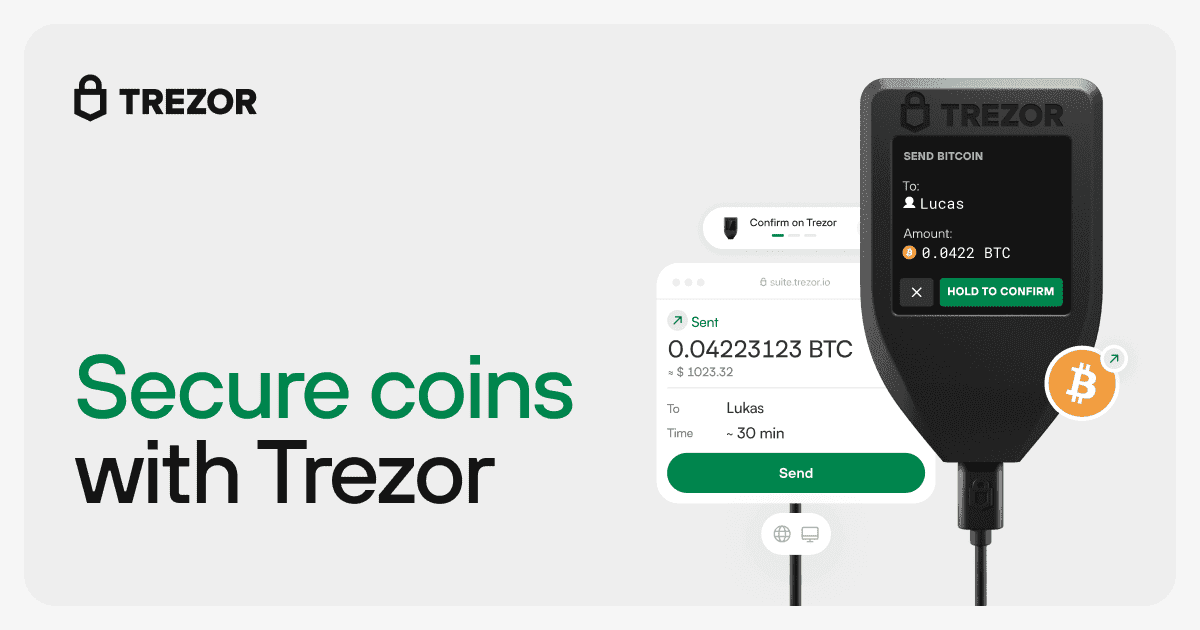
Every outgoing transaction must be approved on the physical device.
Cryptocurrency Support
Trezor wallets support a wide range of digital assets, including:
Bitcoin
Ethereum
Litecoin
Cardano
Polygon
Thousands of ERC-20 tokens
Some coins require third-party wallet integration depending on the model.
Receiving Crypto Securely
To receive cryptocurrency:
Generate an address in Trezor Suite
Verify the address on the device screen
Share the verified address only
Always verify addresses on the hardware screen to avoid malware-based attacks.
Sending Crypto With Confidence
When sending funds:
Enter the recipient address
Review the amount and network fee
Confirm transaction details
Approve the transaction on the Trezor device
This confirmation step ensures complete transaction control.
Keeping Your Wallet Updated
Firmware and software updates are critical for maintaining security.
Updates may include:
Vulnerability fixes
Performance improvements
Support for new assets
All updates are performed through Trezor Suite and require on-device confirmation.
Recovering Funds If the Device Is Lost
If your Trezor is lost or damaged:
Buy a new Trezor device
Visit Trezor.io/start
Select wallet recovery
Enter your recovery seed
As long as the seed is secure, your funds remain safe.
Common Problems and Solutions
Device not detected
Try another USB cable
Restart the computer
Use a different USB port
Firmware update error
Restart Trezor Suite
Reconnect the device
Ensure stable power
Forgot PIN
Reset device
Recover wallet using recovery seed
Protecting Yourself From Scams
Scammers often impersonate Trezor support.
Stay safe by:
Using only trezor.io websites
Ignoring messages requesting recovery words
Avoiding unofficial apps
Verifying all actions on the device screen
Trezor will never ask for your recovery seed or PIN.
Who Should Use a Trezor Wallet?
Trezor is ideal for:
Long-term investors
Security-focused users
People holding large crypto balances
Anyone wanting full ownership of assets
Trezor.io/start makes secure self-custody accessible to all experience levels.
Final Conclusion
Trezor.io/start is the foundation of safe and responsible cryptocurrency storage. It ensures that your hardware wallet is genuine, your private keys are generated securely, and your assets remain under your full control.
By following the official setup process and applying recommended security practices, users significantly reduce risk while gaining confidence in managing digital assets. In a world where security mistakes are irreversible, Trezor.io/start provides the clarity and protection every crypto user needs.